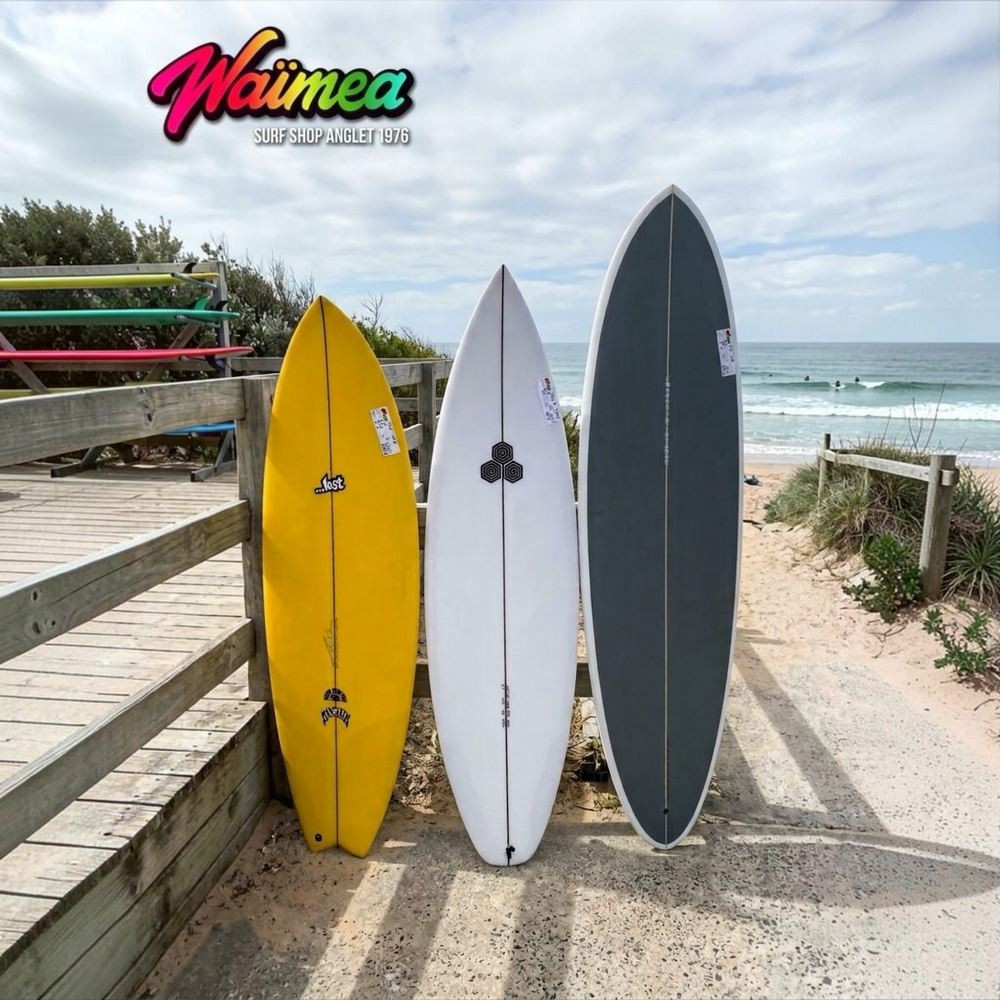
Choosing the right surfboard is a crucial step in making progress and getting the most enjoyment out of being in the water. With factors such as volume, length, shape and the type of waves you’ll be surfing to consider, it’s easy to feel overwhelmed by the vast range of models available on the market.
At Waïmea Surf Shop in Anglet, we’ve been supporting surfing enthusiasts since 1976. Whether you’re catching your very first waves at Sables d’Or beach or looking for a sharp shortboard to tackle the beach breaks of the Basque Coast, our experts have compiled all the essential criteria in this guide to help you find the ideal board for your build and skill level.
Take your skill level into account
The first factor to consider when choosing your equipment is your experience in the waves:
- Beginner: you’re new to surfing or only surf occasionally. You’re learning to paddle efficiently, to get past the break in small conditions and to get a good take-off in the whitewater or on small, gently rolling waves.
- Intermediate: you’re self-sufficient at the peak and manage most of your take-offs on unbroken waves (green waves). You know how to ride the shoulder of the wave (frontside and backside) and are starting to link together your first turns (bottom turn, roller).
- Advanced: you surf regularly in all conditions, including fast, hollow waves. You’ve mastered your positioning, generate your own speed and execute challenging, radical manoeuvres with precision.
Consider the shape and design
The shape directly influences how the board behaves on the water. A wide nose provides stability when paddling, whilst a pronounced rocker prevents the board from getting stuck in hollow waves. Always tailor your choice to the wave conditions you surf most frequently.
- The Longboard (9'0 and over): Very long with a rounded nose, it offers an ultra-easy paddle and a smooth glide. It’s the go-to board for small, mushy waves and retro-style riding (nose-riding).
- The Mini-Malibu / Progressive (7'0 to 8'6): Shorter and more manoeuvrable than the longboard, it retains plenty of volume. It’s the ideal shape for beginners or for progressing at your own pace.
- The Mid-Length / Egg (6'6 to 8'0): With its gentle curves and well-distributed volume, it combines the ease of paddling of a large board with the responsiveness of a smaller one. Extremely versatile, it performs well in almost all conditions.
- The Fish / Twin (5'4 to 6'2): Short, wide and featuring a swallowtail, it generates a huge amount of speed. It excels in small to medium waves, offering fluidity and fun.
- The Shortboard (5'6 to 6'4): Short, narrow and pointed at the nose, it’s designed for pure performance. It offers maximum grip and manoeuvrability for committed manoeuvres in hollow, fast waves.
Which volume and size should you choose?
Volume (measured in litres) determines your board’s buoyancy. The higher the volume, the easier it is to paddle and the more accessible the take-off.
The size of the surfboard (measured in feet/inches) determines paddling comfort and stability when catching waves. The larger it is, the easier it is to paddle.
Here are our general recommendations based on your weight and skill level:
| Surfer’s weight | Beginner (Stability & easy paddling) | Intermediate (Progression & versatility) | Advanced (Performance & manoeuvres) |
|---|---|---|---|
| Under 55 kg | Length: 7'0 to 7'6 Volume: 42 to 50 L |
Length: 6'0 to 6'8 Volume: 30 to 38 L |
Length: 5'4 to 5'10 Volume: 22 to 26 L |
| 55 to 65 kg | Height: 7'4 to 8'0 Volume: 48 to 58 L |
Length: 6'2 to 7'0 Volume: 34 to 42 L |
Height: 5'6 to 6'0 Volume: 25 to 29 L |
| 65 to 75 kg | Length: 7'8 to 8'4 Volume: 55 to 65 L |
Length: 6'4 to 7'2 Volume: 38 to 46 L |
Height: 5'8 to 6'2 Volume: 27 to 32 L |
| 75 to 85 kg | Length: 8'0 to 8'6 Volume: 62 to 75 L |
Length: 6'6 to 7'6 Volume: 42 to 52 L |
Height: 5'10 to 6'4 Volume: 30 to 36 L |
| Over 85 kg | Length: 8'4 to 9'0+ Volume: 72 to 85 L+ |
Length: 6'10 to 8'0 Volume: 48 to 60 L |
Height: 6'0 to 6'6 Volume: 34 to 42 L |
Advice from the Waïmea team: If you mainly surf in winter wearing a thick wetsuit (4/3 mm or 5/4 mm) and booties, remember to add 2 to 3 litres for comfort to compensate for the weight of your kit.
Is it better to buy a new or second-hand board?
Second-hand boards are an excellent option for expanding your quiver on a budget or trying out a new shape without breaking the bank. On the other hand, a new board guarantees an intact structure, free from water ingress, and allows you to choose exactly the right dimensions and fin box to suit your surfing style. Feel free to browse our regularly updated second-hand surf section at the Anglet shop. Our second-hand surfboards
Can I try out a board before buying it at Waïmea?
Yes. Thanks to our surfboard hire service in Anglet, you can hire different types of boards (foam, longboard, mid-length, shortboard) by the day or by the week to get a feel for them in the waves before making a purchase. Our board hire
Other posts
Discover the BOLD RPM FOIL BOARD for prone foiling
Mystic impact vest: discreet protection under your wetsuit
Find your perfect surfboard at Waïmea
Take your surfing to the next level with Britt Merrick’s Twin Futures Fins
Surf forecast for Anglet: forecast and live webcam
Take your surfing to the next level with the FCS 2 MF PC Twin + Stab fins
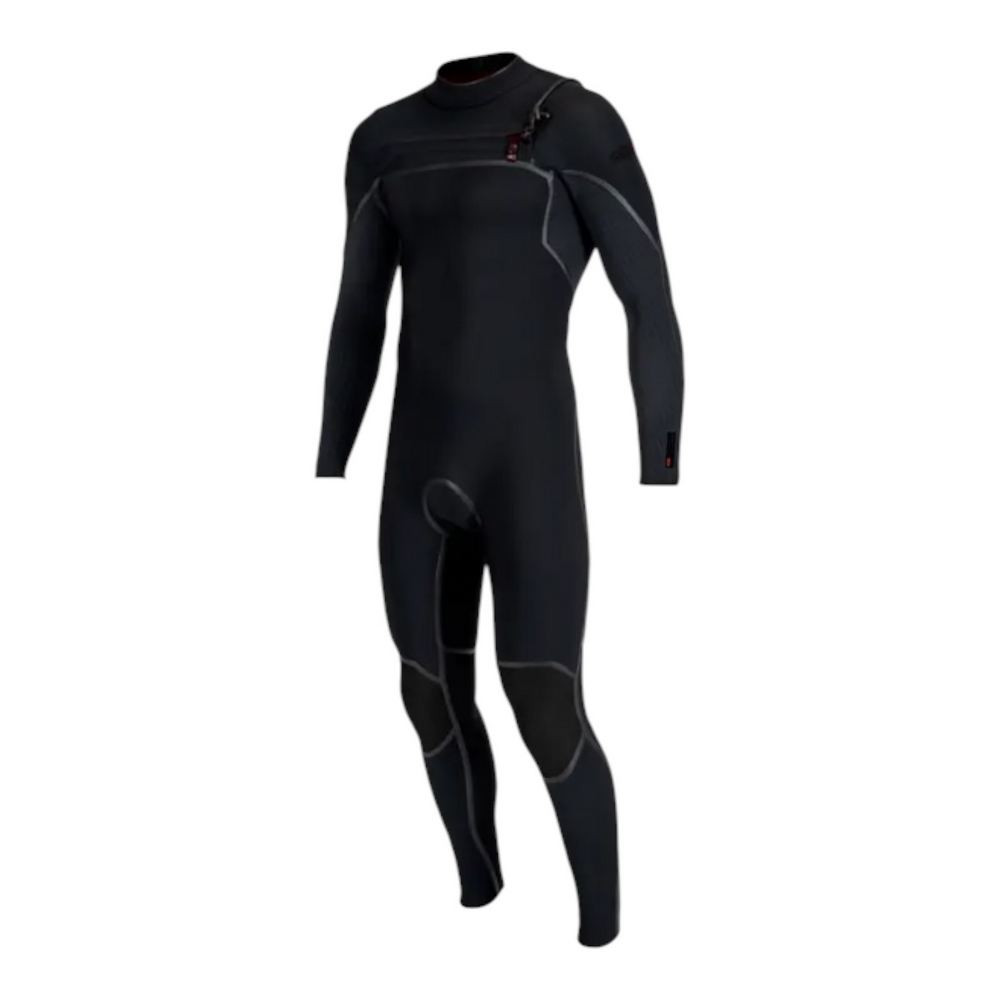
O'Neill Hyperfreak Fire 4/3+ CZ Men’s Winter Surf Wetsuit